


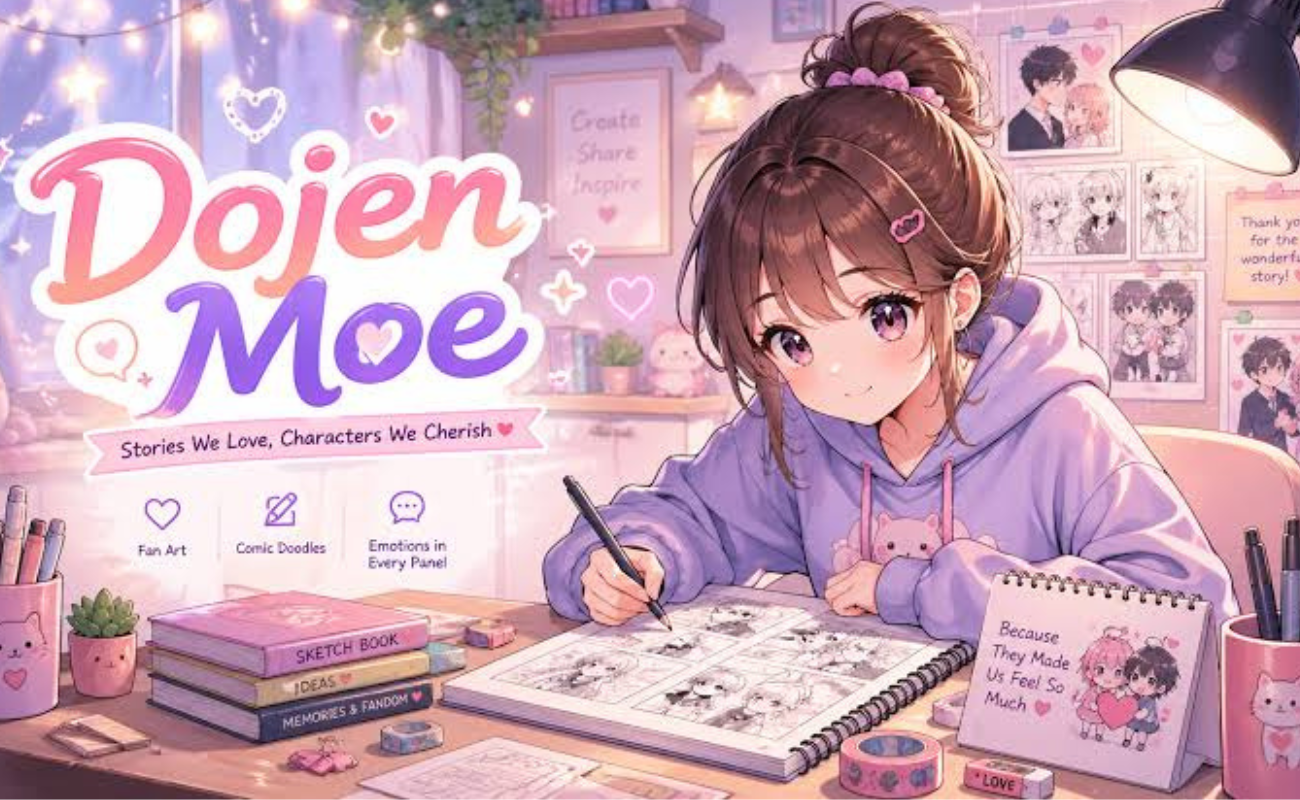
Doujen Moe is one of those internet phrases that shows up everywhere without anyone agreeing on what it really is. At its core, it describes fan-made anime and manga content that blends the independent spirit of doujinshi with the warm emotional pull of moe — that soft, protective feeling fans get toward fictional characters. Nobody stamped it into a dictionary, and if you dig through enough websites, you will find half a dozen ways to spell it.
Breaking Down the Phrase
The term borrows from two well-worn ideas in Japanese fan culture. Doujinshi refers to self-published comics, art books, and stories created by fans who operate outside the big publishing houses. Moe, on the other hand, is about attachment — that flutter in your chest when a character feels especially endearing or vulnerable. Put them together and you get Doujen Moe: fan work that is both independently made and emotionally charged, usually centered on character relationships rather than explosive action sequences.
That emotional focus is what separates it from mainstream anime discourse. Where studio productions often chase broad appeal, Doujen Moe’s content tends to feel intimate, almost like a secret shared between the creator and a small circle of readers who understand the same emotional shorthand.
The Roots Run Deep
Doujinshi did not appear out of nowhere. Back in the 1970s, fans of Space Battleship Yamato started printing their own comics to trade drawings and story ideas with each other, and by 1975, the first Comic Market — now the massive Comiket convention — opened its doors as a marketplace for exactly this kind of self-published work. Moe followed a different path, surfacing in Japanese fan conversations during the early 1990s as a way to describe the intense affection people felt for certain fictional characters. Scholars have since studied it as a genuine affective response, not just casual fandom.
These two threads stayed separate for a long time. Then the internet happened. Online spaces became the place where fans shared self-published art and gushed about characters in the same breath, and gradually the language around both practices started to blur together. That overlap — doujinshi as the format, moe as the feeling, is what birthed Doujen Moe as a loose, catch-all label.
Why the Spelling Keeps Changing
If you search for this term, you will trip over Doujen Moe, Doujin Moe, Dojen Moe, and probably a few others. That inconsistency is actually a clue: the phrase is spreading organically through blogs and social posts rather than being codified by any official source. Each writer spells it the way they hear it or the way their keyboard suggests, and because there is no authority correcting them, the variations multiply. This messy, self-directed spread is typical of how niche internet language evolves.
Also read: Active Cornering Enhancement: How It Actually Works
Where It Sits in Anime Culture

Anime fandom has always been powered as much by fans as by studios. People do not just watch shows, they redraw scenes, write alternate endings, remix characters into new settings, and post everything to tight-knit communities where taste matters more than technical polish. Doujen Moe fits this ecosystem perfectly because it names something fans were already doing: creating emotionally resonant work without corporate backing.
The phrase also carries the weight of otaku history. As doujinshi and Comiket helped build modern manga and anime fandom from the ground up, labels that reference that heritage carry automatic credibility. When someone calls a piece of fan art “Doujen Moe,” they are not just describing a style — they are nodding to decades of independent creative tradition.
Why It Is Popping Up Now
The recent surge in attention comes down to speed. Online fan culture moves at a pace that makes traditional publishing look frozen in time. A phrase can appear on a blog one week, get picked up by Instagram accounts the next, and suddenly show up in search trends with no formal announcement. Doujen Moe benefits from this because it sounds like a real category even though it is not, which makes it perfect for headlines, tags, and quick explainer posts.
There is also the familiarity factor. Since both “doujinshi” and “moe” are already part of the anime fan vocabulary, smashing them together creates instant recognition. Readers feel like they already know what it means, which lowers the barrier to sharing and repeating it.
How People Actually Use It
In practice, Doujen Moe shows up as a descriptor for soft, character-focused fan manga, gentle fan art that emphasizes cuteness or vulnerability, and self-published stories that prioritize emotional connection over plot mechanics. It also functions as a tag on social platforms and content hubs. A GitHub topic using the phrase has existed since 2018, which means this is not a brand-new 2026 invention — it has been circulating in corners of the internet for years, slowly building momentum.
The Important Distinction
It is worth keeping Doujen Moe separate from standard anime terminology in your head. Doujinshi and moe each have established, traceable meanings in Japanese culture. Doujen Moe is the internet’s attempt to fuse them into a single shorthand, and while that shorthand is useful, it is not formal. If you need precision, stick to the original terms. If you need a quick way to describe emotionally driven independent fan work, Doujen Moe gets the job done — just know that you are using a fan-coined label, not an academic one.
Why People Keep Searching For It
Search traffic around this phrase comes from a few places. Some readers stumble across it on anime art blogs or Instagram pages and want to know what it means. Others notice the spelling variations and search to figure out which version is “correct” — spoiler, none of them are. The term also benefits from trend-chasing content that presents it as a hot new category, which drives curiosity even when the underlying concept is not particularly new.
Where Confusion Creeps In
The biggest risk with Doujen Moe is that it sounds official. Because it borrows from two legitimate cultural concepts, people assume the combined phrase must be equally legitimate. In reality, it is mostly a convenient internet label. The safest approach is to understand the parts first, the self-publishing tradition, the emotional language of moe and then treat Doujen Moe as a modern fan-culture shortcut that wraps both ideas into one easy package.
Final Word
Doujen Moe is an informal online label that stitches together two long-standing threads of Japanese fan culture: the self-published independence of doujinshi and the emotional warmth of moe. It describes fan-made anime and manga content that feels personal, character-driven, and soft rather than loud or studio-polished. The term has no dictionary entry and no fixed spelling, but it keeps surfacing across blogs, social posts, and search trends because it gives fans a quick way to name something they were already doing — creating emotionally resonant work outside the mainstream system. Understanding the two parts behind the phrase matters more than treating the combined label as an official category, since its real value lies in describing a creative space rather than defining a rigid genre.
Read more: Startup Booted Fundraising Strategy for Tech Startups and Saas Foundation
