

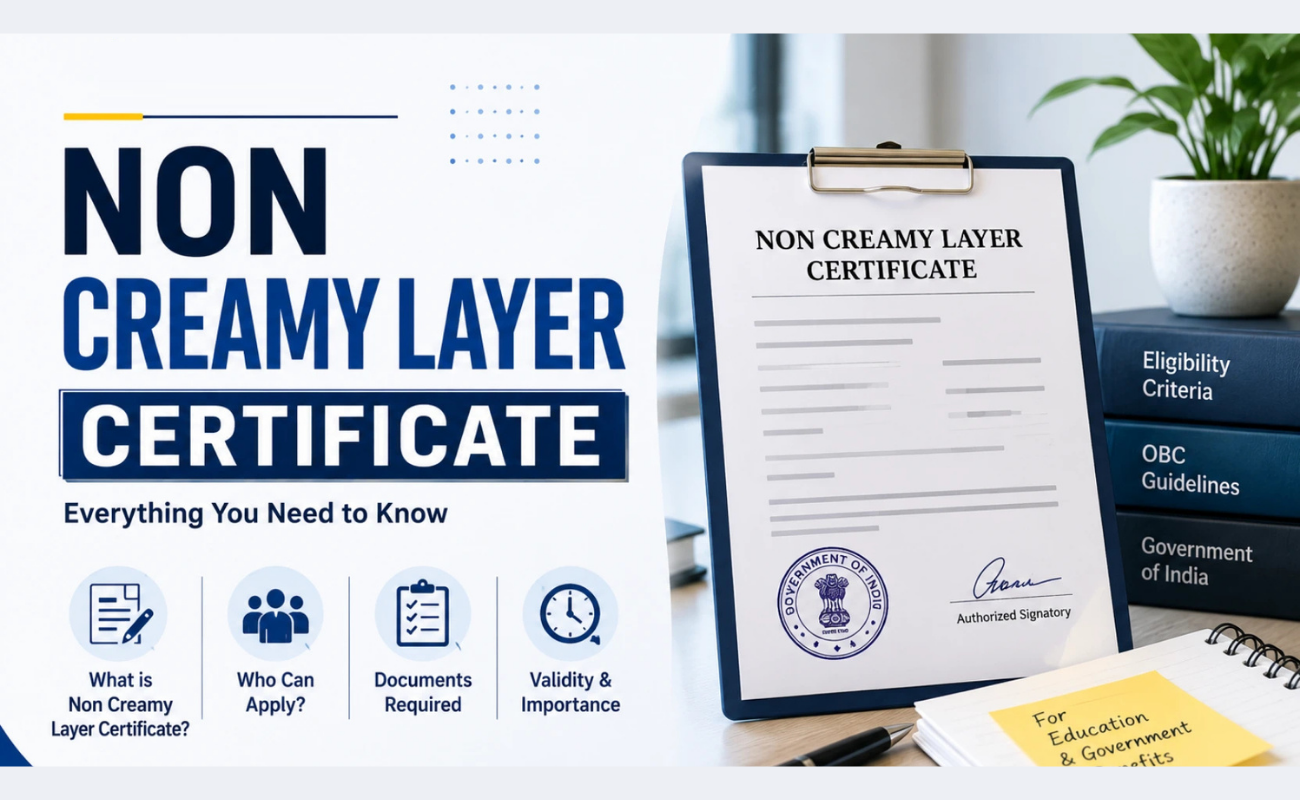
If you belong to the OBC category and you want to get benefits like job reservation, admission in a good college, or a scholarship, you will hear one term again and again. That term is Non-Creamy Layer Certificate. Many students and parents get confused about this paper. In this blog, I will explain everything in easy language, step by step, so you can understand it fully and apply without any stress.
What Is Non Creamy Layer Certificate
The OBC category in India has two parts. One part is called Creamy Layer and the other part is called Non Creamy Layer. This split came after the Supreme Court judgment in Indra Sawhney v. Union of India in 1992, which supported OBC reservation but also said that rich and well-settled members of OBC should not get this benefit.
So in simple words, Creamy Layer means those OBC families who are already well off, either because of high income, a big government post, or large property. And Non-Creamy Layer means those OBC families who are not that rich and still need support. The income limit for this creamy layer cutoff is currently Rs 8 lakh every year, and this amount is counted from the total income of the family except farming income. So if your family earns from agriculture, that money is not added while checking eligibility.
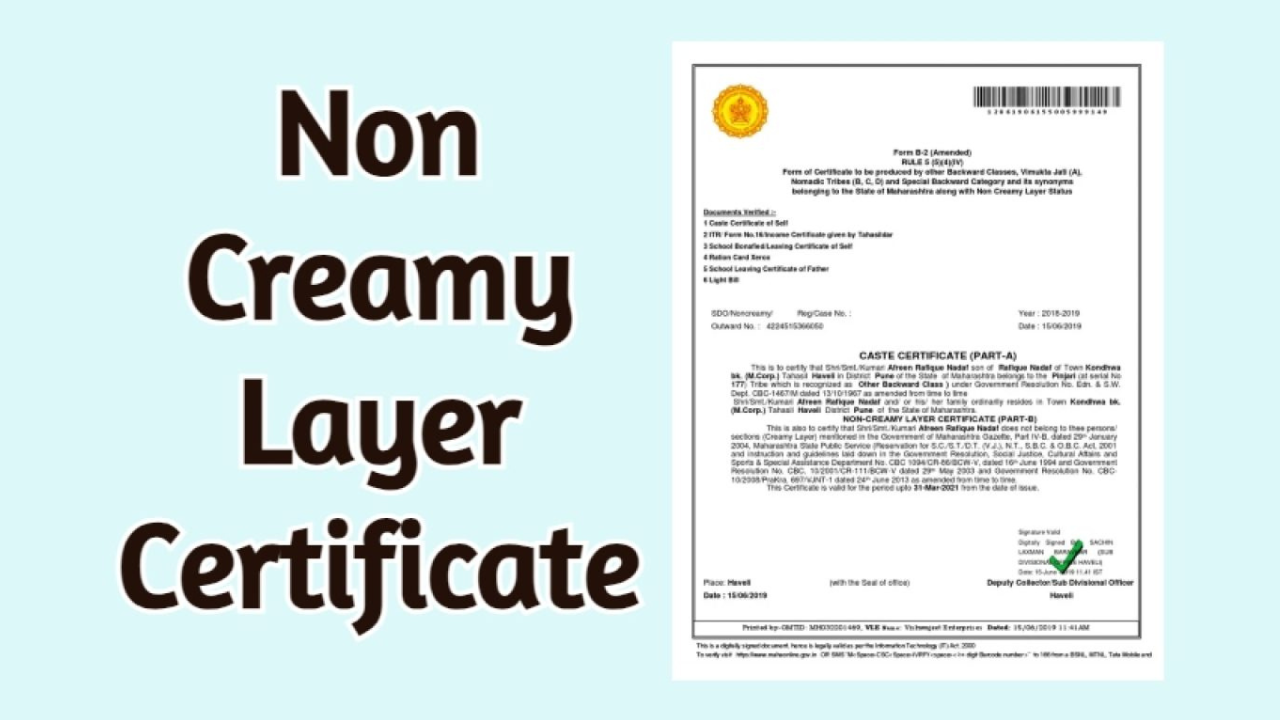
This certificate proves that you fall in the Non-Creamy Layer category, which means you can use the reservation benefit given to OBC candidates.
Why This Certificate Is So Important
Many people think just having an OBC caste certificate is enough. But that is not true. Only having OBC status is not enough, you also need this Non-Creamy Layer paper to get the full 27 percent reservation quota in jobs and top colleges like IITs and IIMs.
Apart from that, this certificate also helps in other ways. It gives access to reservation in education and government jobs; it helps you get scholarships and welfare schemes; it proves you are not from the rich section of OBC; and it also gives age relaxation along with extra attempts in competitive exams.
Who Can Apply For This Certificate
Before you apply, check two simple things.
First, your caste name should be present in the OBC list. Remember that the Central list and the State list are different, so being in one list does not mean you are automatically in the other list too. So always check both lists for your state and for central purpose separately.
Second, your family income should be under the cutoff. As an example, in Madhya Pradesh, a person must be an Indian citizen, a permanent resident of that state, belong to OBC category, and the yearly family income, excluding agriculture, should not go beyond Rs 8 lakh. Rules like this apply in most other states too, with small changes here and there.
Documents You Will Need
Getting your documents ready before you start saves a lot of time. Here is the common list you should keep with you.
Identity proof such as Aadhaar card, Voter ID, or PAN card
Address proof like a ration card, utility bill, or passport
Caste proof, which can be the OBC certificate of your father or a blood relative
Income proof or a self-declaration about the family income
Passport-size photographs
An affidavit stating your family comes under the Non-Creamy Layer income group
In some states, you also need a stamp paper affidavit. For example, in some places you may need to buy Rs 20 stamp paper and get an affidavit from a Notary Public Advocate, along with the other required documents attached.
Read Also: Almawadahit com: Your Complete Guide to UAE Information and Digital Solutions
How To Apply Step By Step
You can apply either online or offline, whichever is easy for you.
Offline Process
Step 1: Go to your local Tehsildar office, SDM office or Revenue office.
STEP 2: Request the Non-Creamy Layer Application form.
Step 3 – Complete the necessary information regarding caste, address, income in the form.
Step 4: Glue all photocopies of your documents, and all original documents for checking.
Step 5: If your father’s certificate is not available, then you can submit the certificate of your blood relative.
Step 6: Hand it in to the clerk and get the receipt number.
Step 7: An officer can call to your house to verify, so be prepared.
Online Process
STEP 1: Access your state government’s official website for e-district or social welfare.
Step 2: If you don’t have a login account, create one.
Step 3: Select the Revenue Department services, after which you can select the Non-Creamy Layer Certificate or OBC Certificate option.
Step 4: Enter your personal information, income details and caste details correctly.
Step 5: Upload all your documents by scanning.
Step 6: Pay the small government fee (usually Rs 20 – Rs 50) and submit your form.
Step 7: Please note your application number which you can use to track the status of your application later.
Step 8: Once approved, download your certificate from the same portal.
How Long Does It Take
The waiting time changes from state to state. In most places, it takes around two to five weeks. In many states, the certificate gets approved within 14 to 21 days once everything is verified. Some states can take a little longer, close to a month, so do not worry if it takes some extra days.
Validity Of The Certificate
This certificate is not valid forever. As seen in Madhya Pradesh, the certificate stays valid for 3 years from the date it was issued, though this rule may change based on new government orders. So keep a note of your certificate date and renew it before it expires, especially before big exams or job applications.
Simple Tricks To Make The Process Smooth
Here are a few tricks that can help you avoid delays and rejection.
Always double check your caste name spelling matches exactly with the official OBC list. Even a small spelling mistake can create trouble later.
Keep both the original and a photocopy of every document ready before you go to the office.
This saves you extra visits.
If your family income is close to the cutoff limit, get your income certificate from a proper authority so there is no doubt during verification.
Apply a little early, at least one or two months before your exam or job deadline, since verification can sometimes take longer than expected.
If you are applying from a new state after migration, keep your old residence proof safe, since many states ask for that during document checking.
Final Word
Getting a Non-Creamy Layer Certificate may look confusing at first, but once you understand the meaning, the eligibility, and the steps, it becomes a simple task. Just keep your documents ready, choose online or offline based on your comfort, and follow the steps calmly. This one paper can open the door to many reservation benefits in jobs, colleges, and scholarships, so it is worth the small effort you put into getting it.
Read More: Alaikas.com Review: Is It a Legit Fashion & Tech Store in 2026?
